Rofco Community
Every Rofco oven is part of a unique story. That’s why we like to let our customers share their experiences, the way they work and the role Rofco plays in their business.
Discover what our customers have to say.
Photography: Friso Keuris
Baking Lab Amsterdam
We have been using multiple Rofco ovens since 2017.
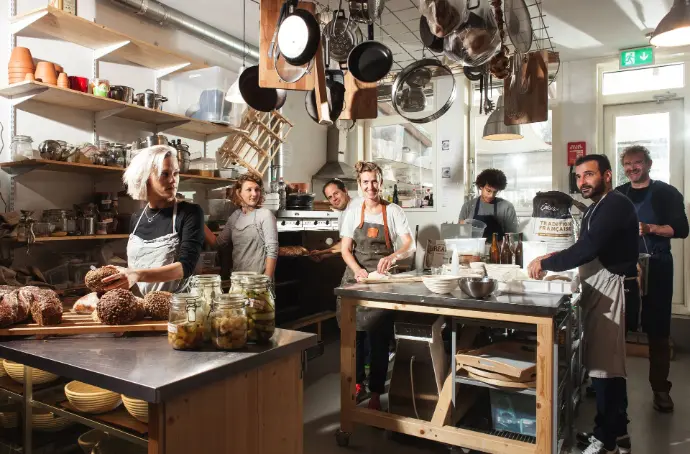
The compact size of the ovens and the favorable electrical requirements fit perfectly with the concept of our educational micro-bakery, which has since become an integral part of the School for Circular Innovation. The school develops innovation programs focused on food waste prevention, tailored for a diverse range of groups—including home bakers, food professionals, and change and sustainability managers.
We use several Rofco ovens, primarily for baking bread and cakes, but also for various other dishes in our café. Baking on stone not only gives our breads a unique character, but also offers our circular bakery many opportunities to cleverly reuse the residual heat from the stones. Thanks to the flexibility of using multiple ovens, we can also easily work with different temperatures—something that is often difficult to achieve with larger production ovens.
The price-quality ratio of the ovens is excellent, and we have also experienced the support for maintenance as very pleasant. With a bit of skill and some remote assistance, the Rofco ovens are easy to maintain yourself—just as you’d expect in a craft-based environment.
Want to know more about Baking Lab Amsterdam?

Atelier Desem
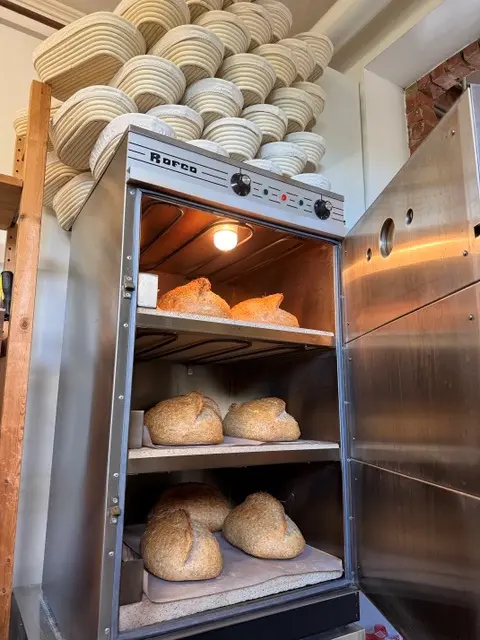
I started three years ago as a sourdough micro-baker, baking one day per week. The tips from Micha during the sales conversation for my B40 gave me the confidence to take the leap.
I bake my loaves directly on the supplied baking sheet, without a baking tin, on the stone floors. The crispy crust I achieve this way is often mentioned by my customers as a major advantage.
Originally, I baked 36 loaves per baking day. The number of loaves steadily increased until I set my maximum capacity at 99 loaves two years ago. A baking cycle of 9 loaves takes approximately one hour: 20 minutes with steam, 20 minutes without steam and 15 minutes reheating. This means the oven runs continuously for 11 hours without any problems!
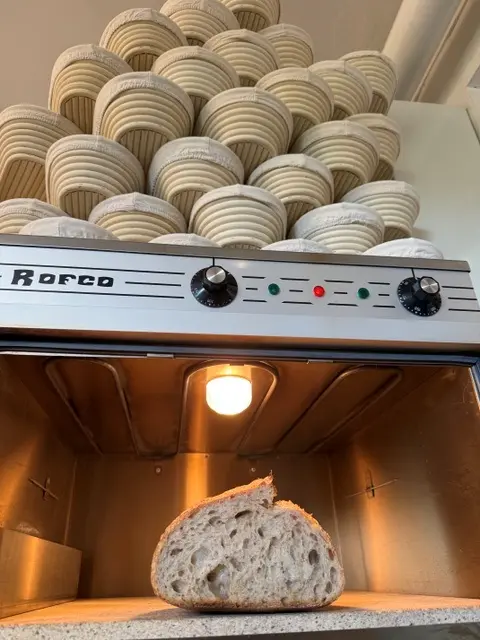
The B40 is a true workhorse at a fair price. Even if you do not bake every day, it remains a worthwhile investment. It does not have all the bells and whistles of some other ovens, but it is an excellent semi-professional appliance.
-05/08/2026-
Want to know more about Atelier Desem?
Website: https://www.atelierdesem.be/


Weekend Bakery
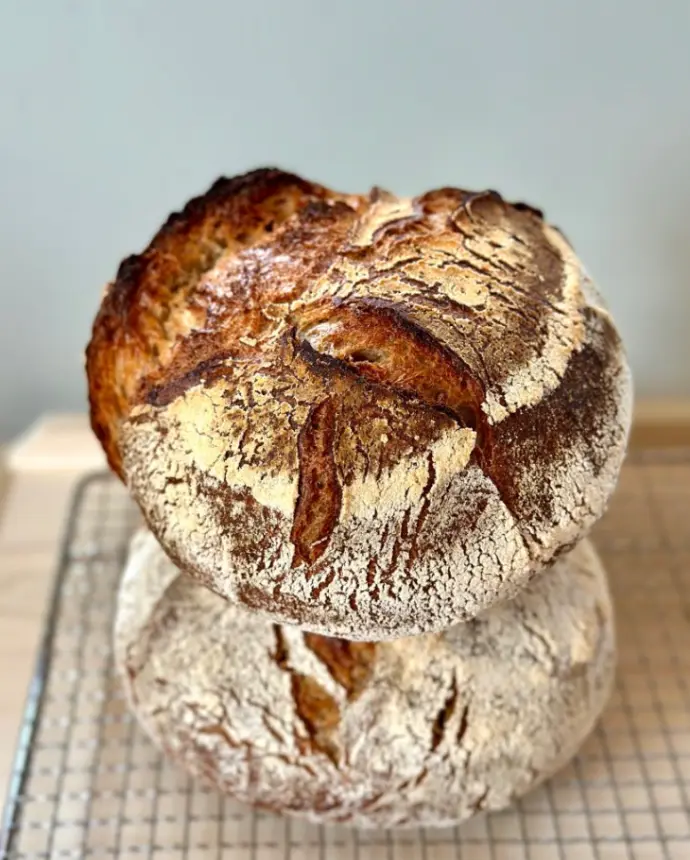
The Rofco bakes your bread on the principle of an old-style wood-fired brick oven. It stores a lot of heat inside the chamotte stone floors and releases it slowly but fiercely into your bread. Compared with a normal household oven made from light sheet metal, the Rofco is much heavier and more simply built. It is a stainless-steel casing filled with rock-wool insulation, with good seals to keep the warmth and the steam inside the oven. Each floor has a heating element underneath and above the stone, with a simple but perfectly working mechanical thermostat. The oven needs to warm up for at least 2 hours. In the first hour the heating elements do most of the work to heat up the stones. In the second hour all this heat stabilises and equalises throughout the oven. The key to good bread with an open crumb structure is plenty of heat right from the start of the bake, which the stone floors deliver through the bottom of the bread into the dough! A household oven fails at this, because it loses a lot of heat the moment you open the door to load your bread. By spraying the inside of the oven with a plant pressure sprayer you can also produce plenty of steam (for a good oven spring) without being afraid of damaging the oven. At the final stage of baking you open the tiny steam vents to release the moisture, so your bread crust can crisp up.
Want to know more about Weekend Bakery?